Field notes: the vendor call that said "we're fine" three hours before the pass disagreed
The call came in at 7:40 a.m., local. Plant manager, tier-2 connector supplier, somewhere on the Gulf side of the storm track that had come through overnight. "We're fine. Some ponding in the yard, roof's intact, we'll be running by Thursday." That line went straight into the allocation notes for three downstream customers, because it's the kind of line a control tower has to act on fast. You don't have the luxury of waiting a week for a second opinion when a line is down and orders are stacking up.
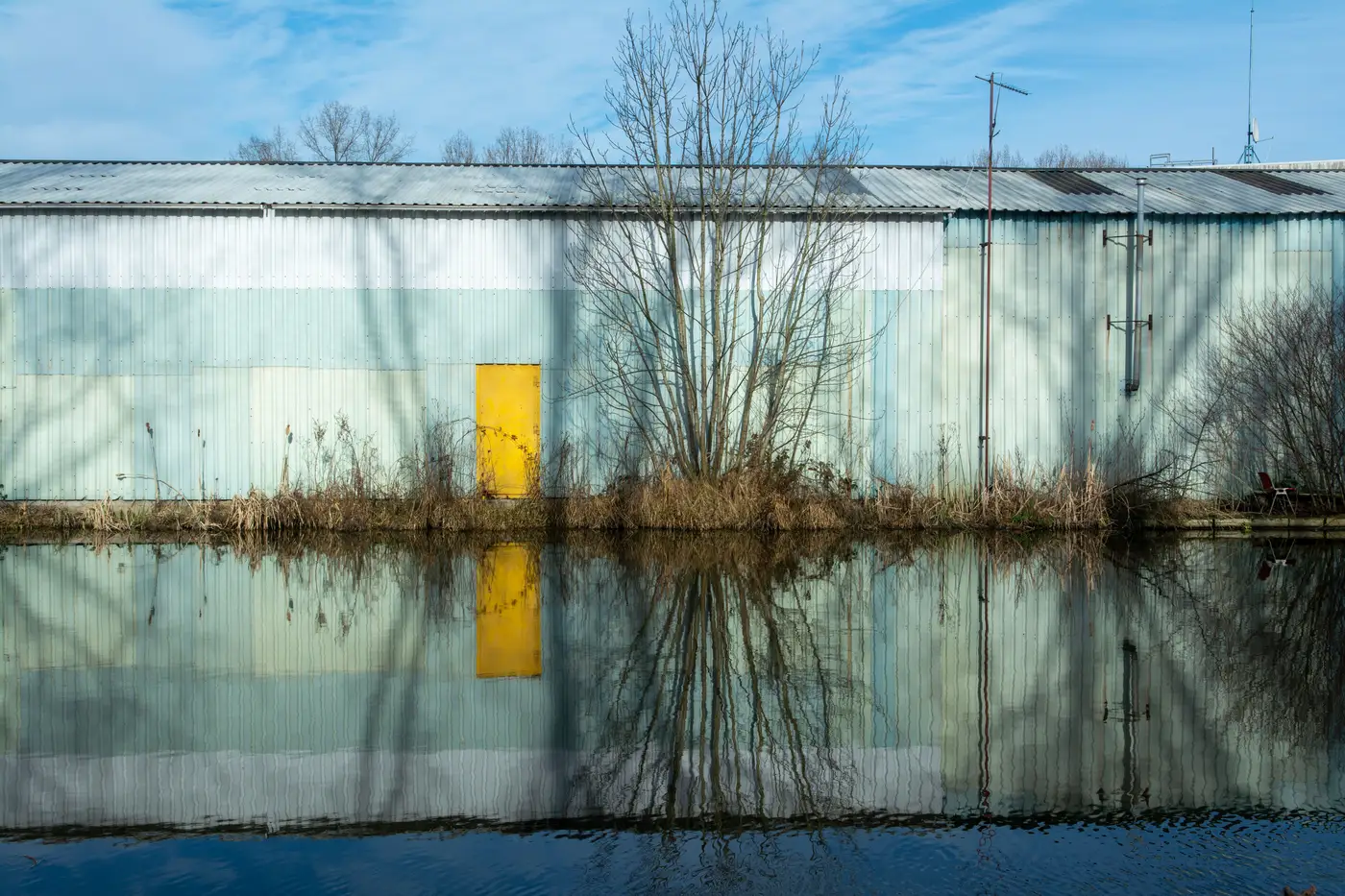
Three hours later, a pass over that same coordinate told a different story. Standing water across a section of the yard that wasn't ponding, it was pooled at a depth that doesn't drain in a day. A section of roofline over what looked like the loading bay showing the kind of tonal break you get from structural damage, not weather staining. Nobody was lying on that 7:40 call. The plant manager almost certainly believed what he said. He'd walked the floor at first light, before the water had finished finding its level, and he never got up on the roof at all.
This is a gap control towers rarely budget for: the distance between what a site contact can see from the ground in the first hours and what actually happened to the building. That distance is a vantage problem, and it has nothing to do with honesty. A person standing in a parking lot at dawn, worried about getting the line running again, is not positioned to assess his own roof deck or know whether the water under his forklifts is two inches or fourteen. He's also, understandably, motivated to say the plant will be fine. A site contact who calls in calm doesn't want his plant tagged as the trigger for a dual-sourcing scramble over damage that turns out to be cosmetic.
Going back through this one afterward, what stands out is that we built three customers' allocation decisions around a single phone call, because at 7:40 a.m. it was the only information anyone had. The adjuster hadn't been dispatched. The supplier's own corporate office hadn't heard from the site yet. For four to six hours, "we're fine" was the entire record, and production moved around on the strength of it before anyone could check.
The sites worth checking first in a footprint like this storm's are the quiet ones: the vendor who doesn't call at all because the line's down and so is the phone, and the vendor who calls early and sounds calm because he hasn't looked up yet. Both get treated the same way in most allocation workflows, assumed fine until proven otherwise, which inverts the risk. The site you haven't heard a damage report from is the one you should be checking first, not last.
What we've started doing, on sites that sit inside a named footprint, is treating the first vendor call as a data point rather than a verdict. It gets logged, it gets weighted, and it gets checked against whatever read exists of the property itself in the same window, so an allocation call made at 8 a.m. isn't resting entirely on one person's view of his own parking lot. That's roughly the gap this kind of per-site, event-triggered check is built to close: a read of the site itself, inside the footprint or outside it, visible damage or none, in the hours when the vendor's own report is still catching up to the storm.
If you've got named sites sitting inside this week's footprint and you're staring at a phone call that doesn't quite match what the storm track suggests, that gap is worth closing before the allocation sheet gets finalized.